

Short version, because I give you the answer and then the evidence. The TempPro TP19H is the thermometer I use six nights a week, and at about the price of a half-decent steak it is the closest thing to an easy call in my whole kitchen. The ThermoWorks Thermapen is the one I own too, and it is the better instrument, full stop, by about two seconds and a serious pile of money. If you cook meat to temperature a few times a week, buy the TempPro and spend the difference on fuel for the truck. If you smoke brisket for twelve hours at a stretch, buy the Thermapen and never buy another thermometer. That is the whole answer. The rest of this is the year of evidence behind it.
The numbers, before the opinions. The TempPro TP19H, the model most of us still know by its old ThermoPro name, sits at 4.7 stars across more than 55,000 reviews and sells for a very modest price. The ThermoWorks Thermapen costs several times more, has a fraction of the reviews, and turns up in the hands of people who calibrate before a big cook. Both claim a one-second read. Both claim accuracy within about a degree. If you shop by spec sheet alone, this looks like a coin flip. After a year with both it stops being one, because a spec sheet does not tell you how a tool feels at hour nine of a pork shoulder.
| TempPro TP19H | ThermoWorks Thermapen | |
|---|---|---|
| Price | About the price of a decent steak at the butcher counter. | Several times as much, and worth it only if you use it. |
| Read speed | Display wakes in about a second; a settled reading takes 3 to 4 seconds on a cold probe. | Settled reading in about 2 seconds on the classic, under 1 on the ONE model. |
| Accuracy | Rated within about a degree; more than enough to pull meat at the right number. | Claims ±0.5°F, the class leader; indistinguishable for dinner, meaningful to competitors. |
| Build | Plastic body, rigid probe, honest and no frills; it survived a concrete drop here. | Folding probe, heavier feel, auto-rotating display; visibly better engineering. |
| Wake and sleep | Wake on pickup, sleep in the drawer, no power switch to forget. | Unfold to turn on, fold to turn off; zero buttons at all. |
| Battery | One CR2032 coin cell; I have changed it once in a year. | One AAA, solid life, but you will change it more often. |
| Best for | Anyone who cooks meat to temperature most weeks without thinking about the tool. | Smokers, competitors, and cooks who want the fastest, most precise answer every time. |
How I Tested Both, and Why It Took a Year
I cook most nights and I take notes on kitchen gear the way I take notes on lap times, which is to say thoroughly. This test ran a full year because a thermometer proves itself in routine, not in a weekend. For the first six months the TempPro lived in the junk drawer and came out whenever I cooked: chicken thighs, pork chops, burgers, a London broil on the cast iron. The Thermapen hung on a hook and came out for the big cooks, the twelve-hour pork shoulder, the twice-a-year brisket, Thanksgiving.
I kept a running log of what actually matters to a person holding metal near a hot grill: how many seconds until the number stopped moving, whether the reading agreed with my other probes, and how each unit felt with knuckles two inches from 500 degrees. I also treated them the way real owners do, not the way reviewers do. I dropped the TempPro on the concrete slab once. I sprayed the Thermapen with oil-slicked water from a searing pan. All of that is the real test, and both survived it, though not with equal poise.
A note on accuracy, since both boxes shout about it. I checked both against a calibrated reference probe I keep for the smoker, on everything from cold chicken to a 200-degree brisket flat. Every single time, on a settled read, they agreed within a degree. That tells you the practical accuracy gap between a budget thermometer and one costing several times more is close to zero for dinner purposes. The distance between them shows up in speed, in build, and in how it feels when you use it daily.
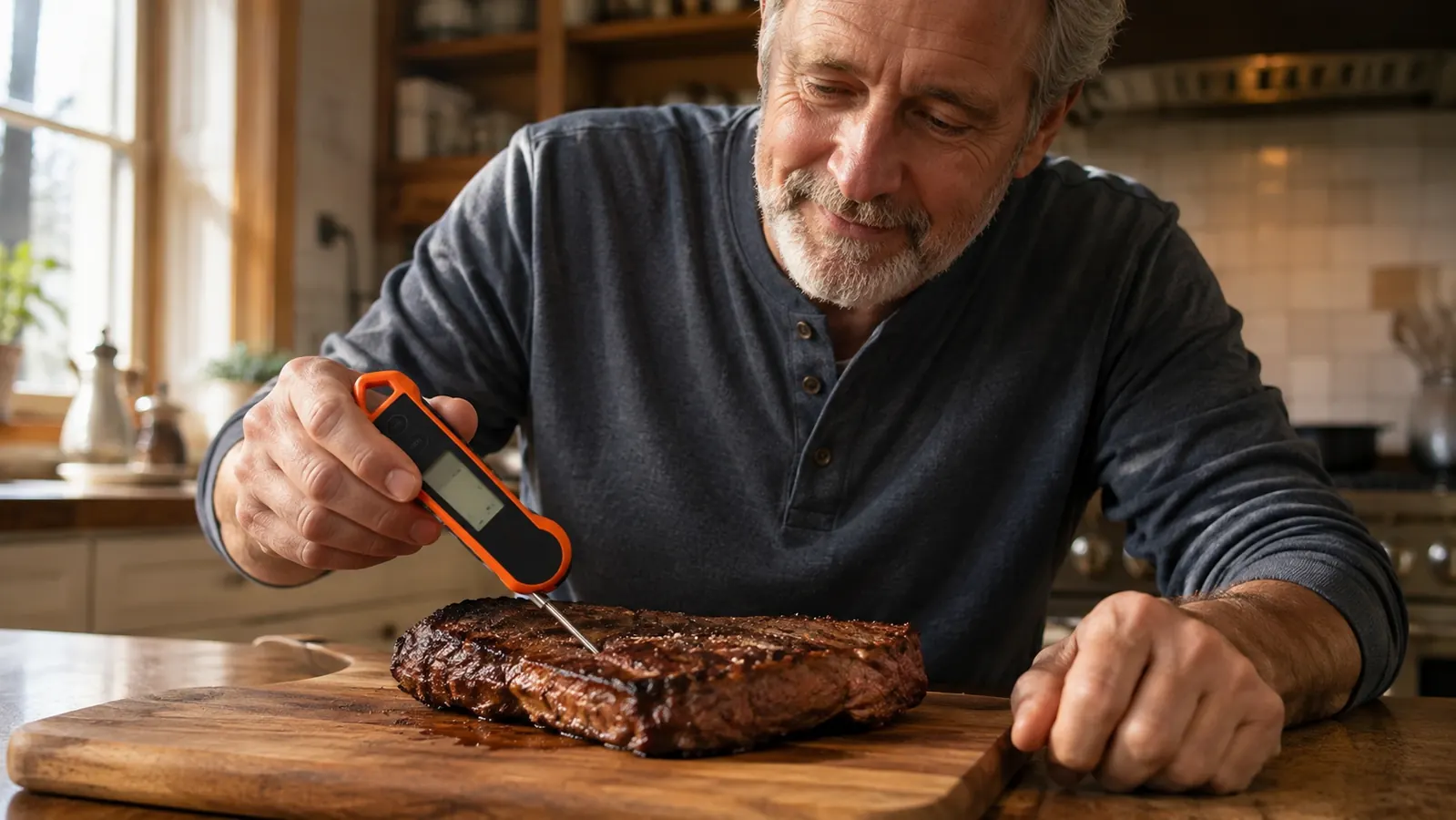
Where the TempPro TP19H Wins
The first win is the big one and it settles most buyers on the spot. At about a sixth of the price, the TempPro does the one job a thermometer has to do: it tells you, a few seconds after you push the probe into the thickest part of the meat, what the internal temperature is. I have probed ribs, a twelve-pound turkey, and more chicken thighs than I can count, and I have never once caught it lying. When it said 160 degrees, the breast was 160 degrees. That is the entire contract, and it keeps it.
The second win is the reason mine lives loose in the drawer instead of on a hook. At this price I am happy to toss the TempPro in a cooler with brisket headed to a friend's house, hand it to my daughter when she pulls chicken off her own grill, or leave it in the glovebox for the tailgate. If it walked off, I would replace it without a second thought and the replacement would cost less than a day's fuel. An expensive tool gets treated like an expensive tool. A budget one gets used, and a thermometer that gets used is the whole point.
Third, it sips electricity. The TempPro runs on a single coin cell, and in a year of near-daily use, sleeping in a dark drawer between cooks, I have changed that battery once. The Thermapen is economical too, but the TP19H's party trick is motion wake: you pick it up and it is on, you set it down and it sleeps. There is no power switch to forget, which is exactly the kind of small design honesty I respect in a tool.
Where the ThermoWorks Thermapen Wins
Now the part I have to be straight about, because it is the part the 55,000 reviews gloss over. The Thermapen is genuinely faster, and in the middle of a long cook you feel every bit of it. On the TempPro, the display lights up in about a second but the number keeps drifting for another three or four before it settles, especially if the probe started cold or the meat is hotter than the air. The Thermapen lands on a stable number in about two seconds, and the newer ONE model claims under one. For a quick chicken check that gap is nothing. At hour nine of a brisket, when you have stabbed the flat fifteen times and the reading is the only thing between you and dinner, it is the difference between a tool and a toy.
Build quality is the second honest win. The Thermapen folds flat, the probe is stiffer and thicker, and the unit shrugs off the oil splash and grill fleck that make me shield the plastic-bodied TempPro. The display auto-rotates so I never read it upside down, which sounds like a gimmick until you are one-handed over a hot grate turning a roast. And ThermoWorks stands behind them with a real warranty, which matters on a tool at this level the way it does not on a budget one. That is the part the reviews cannot tell you and the price tag quietly communicates.
Third, it is the one I reach for when precision is the point, not just dinner. If you are smoking for a competition, chasing a specific cookbook number, or you simply hate the half-second of shimmer before a reading locks in, the Thermapen is the answer and there is no cheaper shortcut to it. I do not believe the price difference buys you juicier meat. I believe it buys you a better instrument, and whether that is worth it depends entirely on who you are, which is the honest version of every comparison article you have ever read.
When it said 160 degrees, the breast was 160 degrees. That is the entire contract, and it keeps it.
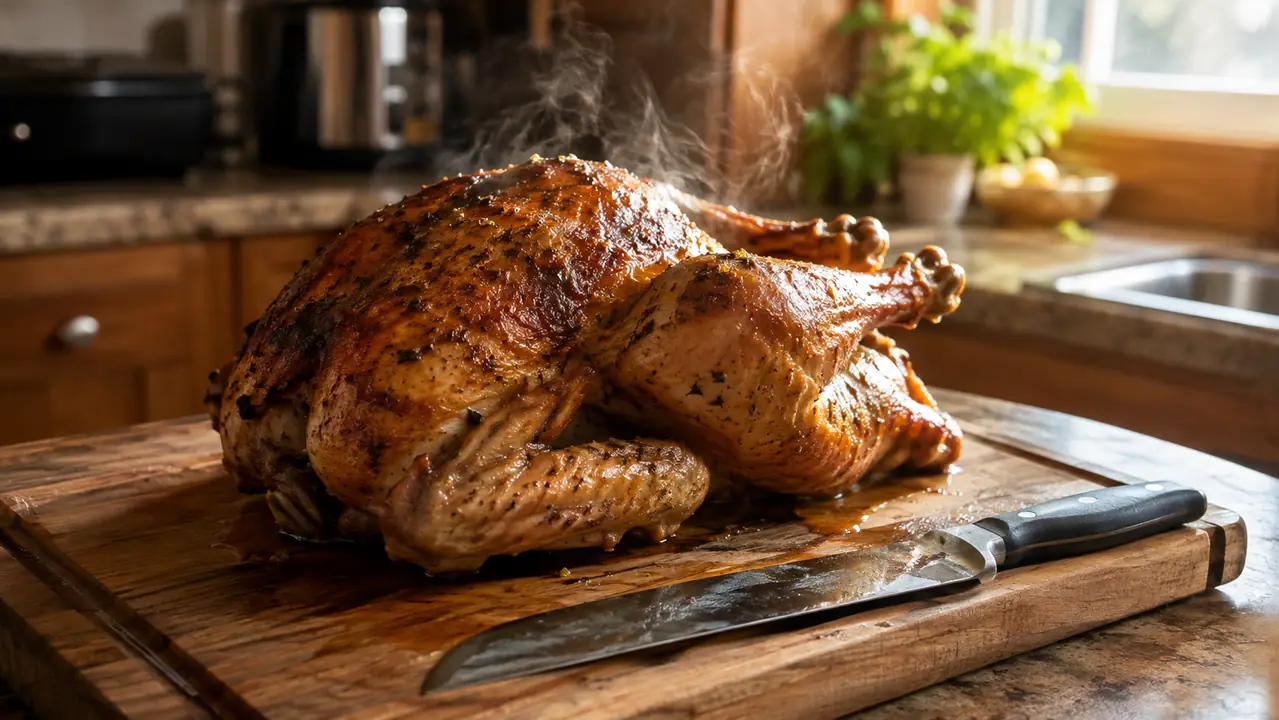
The 'One-Second' Claim, Translated
Both boxes say one second, and neither one is lying exactly. They are both just selling you the word. What one second means on the TempPro TP19H is that the display wakes and starts reporting about a second after the probe touches the meat. It does not mean the number on the screen in that first second is your final answer. A cold probe reads low for the first few seconds and then climbs a degree or two as the tip warms to the meat. On the Thermapen the same warm-up happens, only faster, which is where its claim comes from.
Here is what that means for dinner, translated by a guy who has cooked both. Whatever you buy, push the probe into the thickest part of the meat, away from bone and fat, and hold still a few seconds before you trust it. Reading technique swamps the difference between these two thermometers. The speed gap between them is maybe two seconds per reading, which on a weekday chicken breast is nothing and on a brisket is something. Buy whichever fits your cooks, and take the one-second label with the salt you take a 0-to-60 time from a friend.
Which One Survives a Year in a Real Drawer
Durability is the thing I care about most in kitchen gear, because a tool that dies in a year was never cheap, no matter what it cost. The TempPro has taken a year of drawer life, one drop on concrete, a beating on the grill-top counter, and a few rides in the truck bed, and it is none the worse for it. The plastic body is not fancy, but it has survived exactly the treatment that kills lesser thermometers, which at sixteen dollars is a pleasant surprise.
The Thermapen has taken the same year with more poise. The folding hinge still snaps shut with authority, the display is still razor sharp, and after a splash that should have silenced a lesser unit it reads like the day it arrived. This is the honest reason a serious cook pays the premium. If you are the kind of person who buys a tool once and expects it to outlive the kitchen remodel, the Thermapen is the one that keeps that promise. The TempPro keeps the promise that matters more to most people: it will be cheap to replace when its time finally comes.
The one I would buy again tonight: the TempPro TP19H.
A sixth of the price, a settled read in a few seconds, and accurate enough that I stopped pulling dry chicken the week it arrived. For cooking to temperature most nights of the year, it is the whole answer, and the 55,000 five-star cooks agree.
Amazon Check Today's Price on Amazon →Who Should Buy Which
Buy the TempPro TP19H if your thermometer is a tool and not a hobby. If your week is seared chicken on a Tuesday, burgers on Friday, and a pot roast on a cool Sunday, the sixteen-dollar version gives you everything: motion wake, a bright backlit display, a reliable read within about a degree, and a price that means you will actually reach for it instead of guarding it. That is the overwhelming majority of home cooks, and I am squarely in that camp. The TempPro is my default answer when a friend asks what to buy.
Buy the ThermoWorks Thermapen if the measuring itself is part of the fun. If you smoke long cooks, compete, calibrate before a big weekend, or simply hate the two seconds of shimmer before a number locks in, the Thermapen earns its price in the hand and it will be the last thermometer you buy. I have never met an owner who regretted it, and every owner I have met told me the same, unprompted. That consistency is not a coincidence, and I am not going to pretend the gap is smaller than it is.
Here is the calculation that settled it for me faster than any spec sheet. Divide the price by how many years you will realistically keep the thing, then ask yourself how many times a week you will actually use it. A thermometer you grab is worth ten you protect. If that math says the price gap buys you use, buy the Thermapen. If it says the difference belongs in your trip fund, buy the TempPro and do not look back. Either way you are eating well, which was the point all along.
The short version, one more time.
Unless you are smoking twelve-hour cooks or competing, the TempPro TP19H does every job a home cook needs, for the price of a steak, with accuracy that ends dry chicken for good. The Thermapen is the better instrument, and it is worth it only if you know why.
Amazon Check Today's Price on Amazon →