
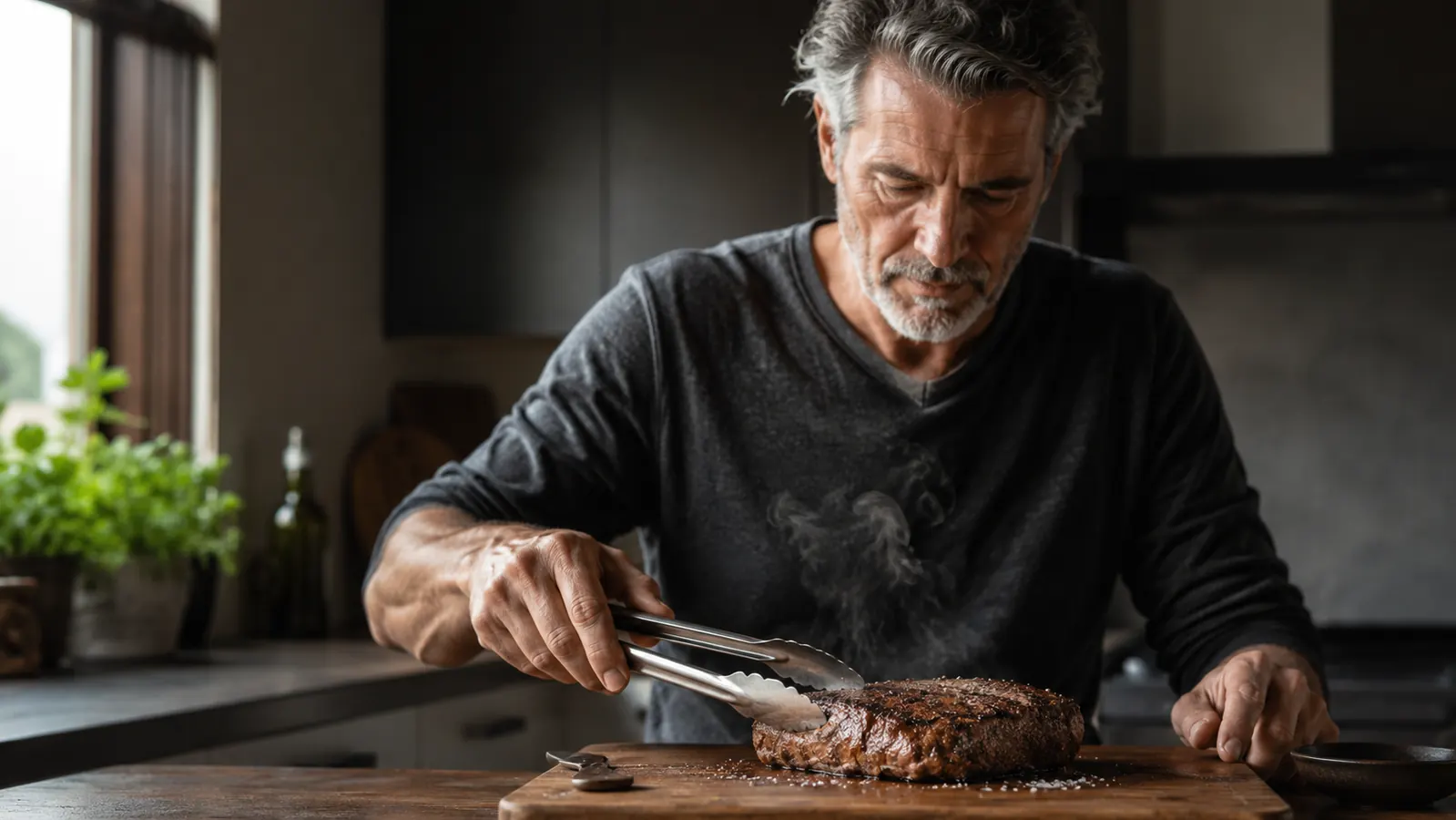
About a year and a half ago, after three decades of cooking by the poke test and the kitchen timer, I finally bought a thermometer that reads in seconds. It was a TempPro TP19H, the folding-pocket instant-read that most people still know by its old name, the ThermoPro TP19H. Same probe, same display, new name on the box. Since it landed in the knife drawer it has checked every piece of meat across my counter: chicken breasts, pork chops, steaks pulled at 130, a fourteen-pound holiday turkey, and one eleven-hour brisket that came off at 203. This is the honest long haul, what the probe does for you and where it stops short.
I am not a competition cook and I do not want a gadget that needs its own charging pad, its own app, and its own shelf on the counter. I wanted one thing: the actual temperature in the middle of the meat, in a few seconds, with no ceremony. The TempPro TP19H does exactly that. In the time since, it has done more for my dinners than any pan, knife or gadget I have bought in this kitchen, and at today's price it cost the least.
The Quick Verdict
The best cheap instant-read I have used in forty years of cooking. Honest in practice, fast enough at grill side, and built to ride in a drawer for years.
Amazon Check Today's Price →Stop Guessing. Start Reading the Number.
If you cook chicken, pork or steak more than twice a month, this probe will buy itself in the first month of not serving a dried-out bird. Check today's price on Amazon and keep one in your knife drawer.
Amazon Check Today's Price on Amazon →How I've Used It
The thermometer lives in the drawer under the knife block, not on the counter. When I fire up the kettle grill I pull it out, flick it once, and the backlight is on before my thumb is off the housing. I use it on everything with a safe number attached. Chicken breast comes off the heat at 160 and carries to 165. Pork comes off at 145. A steak I want medium-rare leaves the fire at 128 and coasts to about 133 while it rests. Last fall, a twelve-hour brisket came off the smoker at 203, wrapped, and rested two hours before anyone put a knife near it.
The real change happened in the middle of cooking, not at the end. I used to slice into a breast to see if it was done, and every cut dumped the juices onto the board. Now I probe the thickest part, read the number, and cover it back up. I stopped cooking to a kitchen timer and started cooking to a temperature, and the last dry chicken I served was before this arrived.
It took me about two weeks to believe the thing. The first time it told me a chicken was already at 168 I pulled it anyway, because the skin looked wan in that kitchen light. It was not. By Thanksgiving I let the probe run the bird. I pulled the turkey at 157 in the deepest part of the breast, the thighs at 175, and it carried over to a safe 165 on the counter while the gravy came together. The carving board emptied in eleven minutes.
What a One-Second Read Really Means
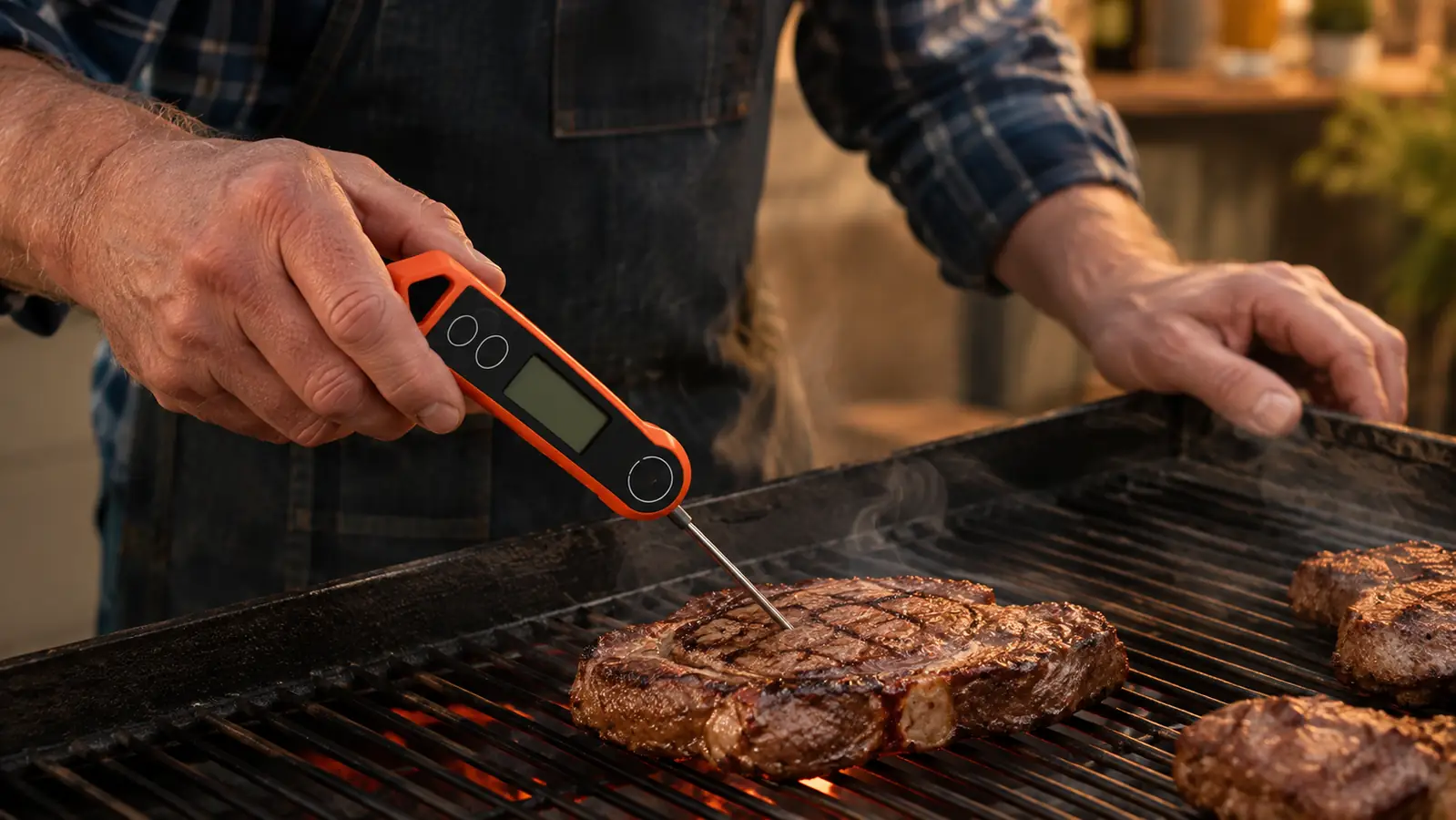
The box says one second. In the real world, on a cold pork chop straight from the fridge, the TempPro settles in two to three seconds and creeps a little after that. On a hot steak it is faster. A three-second wait does not ruin a meal. Guessing the doneness does, and that is the guess this kills.
The display rotates so the number reads upright whichever way you hold it, which matters more than it sounds when the probe is sideways against a hot grill. The backlight is bright enough to read in mid-afternoon sun, and the tip is thin enough that the hole it leaves in a steak is nothing. The same small probe tip has gone into a cold turkey out of the fridge, a hot oven roast, a pot of frying oil and a grate directly over lump charcoal. It reads the same today as the week it arrived.
When speed does matter, it is on the grill, where every second the lid stays up bleeds heat. Even at two to three seconds I am in and out long before the coals care. The bigger time law is probe placement: get the tip into the thickest part of the muscle, keep it off bone and fat, and on a big roast take two or three readings in different spots before you trust it.
One more honesty note. The listed one-second read is a best-case number, like the empty weight on a boat brochure. The published rating and the real-world number are different things, and the real-world number is still more than good enough for a home kitchen.
Good Enough to Trust, Even for a Guy Who Likes Numbers
I spend my weekends around engines, so I already owned a thermocouple and a shop infrared gun before this arrived. The first week I had the TP19H, I checked it against both. Boiling water, a warm pan, a cold steak straight from the fridge. Once the display settled, it agreed with the shop probes within a degree, and the infrared gun hated the shiny pan so I ignored it. That agreement is all a home cook needs, and it is more honest than the dial thermometers I grew up with, which could drift ten degrees and took a full minute just to move.
The plainer truth is that consistency beats precision. Knowing the probe reads the same way every time, so I can pull at a number and trust the carry-over, is the entire game. At today's price, the peace of mind costs less than a bag of charcoal.
There is no calibration ritual in my kitchen. Some old-school cooks fuss with ice water and boiling water once a month. Mine has held its own for the whole time I have owned it, spot-checked against the shop tools every few months when the mood strikes. If it ever starts lying to me, the display will drift, and I will catch it before a dinner does.
A Year in the Knife Drawer
The motion wake works the way the listing says: grab it and the face lights up. It misses now and then and wants a firmer shake, which costs two seconds and no dinners. The auto-off takes care of the display when you set it down, and the button cell in mine lasted about a year before I swapped in a spare from the drawer with the garage remotes.
The folding hinge still clicks shut, and the probe holds a clean reading after hundreds of pushes. The case has picked up honest dings sharing a drawer with a steel spatula, all cosmetic. Nothing on mine has failed, worn loose, or changed how it reads in all the time I have owned it, which is more than I can say for the two dial thermometers the same drawer outlived.
Two gripes worth writing down. First, the one-second claim on the box is marketing, not measurement; call it two to three seconds and you will be right every time. Second, because the probe folds, it will not sit inside the grill and monitor all afternoon. If you smoke meat for twelve hours and want to sleep through the window, you need a wireless unit with a receiver. That is a different tool, and the TP19H makes no apology for not being it.
Beyond the Meat: Oil, Candy, and Leftovers
The thermometer earns its keep well past the grill. Frying oil is the obvious one. Chicken wings at 360 instead of a guess, and the difference between crisp and greasy shows up in the readout long before it shows up in the bite. I fry by number now, and the oil stays where it belongs batch after batch.
Candy is where it really pays. My wife's family runs a holiday fudge operation, and for years we babysat the pot with the cold-water test, which never failed to be dramatic and never failed to be argued over. The TP19H in the syrup, stirred so the tip reads the middle of the boil, takes soft-ball and hard-crack off the list of family disagreements. This year the first batch set in ten minutes flat, and the thermometer got promoted from kitchen gadget to holiday tool on the spot.
The quiet daily win is reheating. Leftover pasta, a Sunday casserole, the good end of a roast sliced thin, all checked to 165 in the middle before they reach the table. And when I open the takeout container in the back of the fridge and wonder how long it has been there, the probe settles the argument between the fridge and the trash can instead of my nose settling it.
None of that shows up in the listing, but it is why the probe is never far from my hand. It stops being a meat tool and becomes the temperature half of my entire cooking routine. That is the real reason a thermometer this cheap becomes a daily habit instead of a drawer ornament.
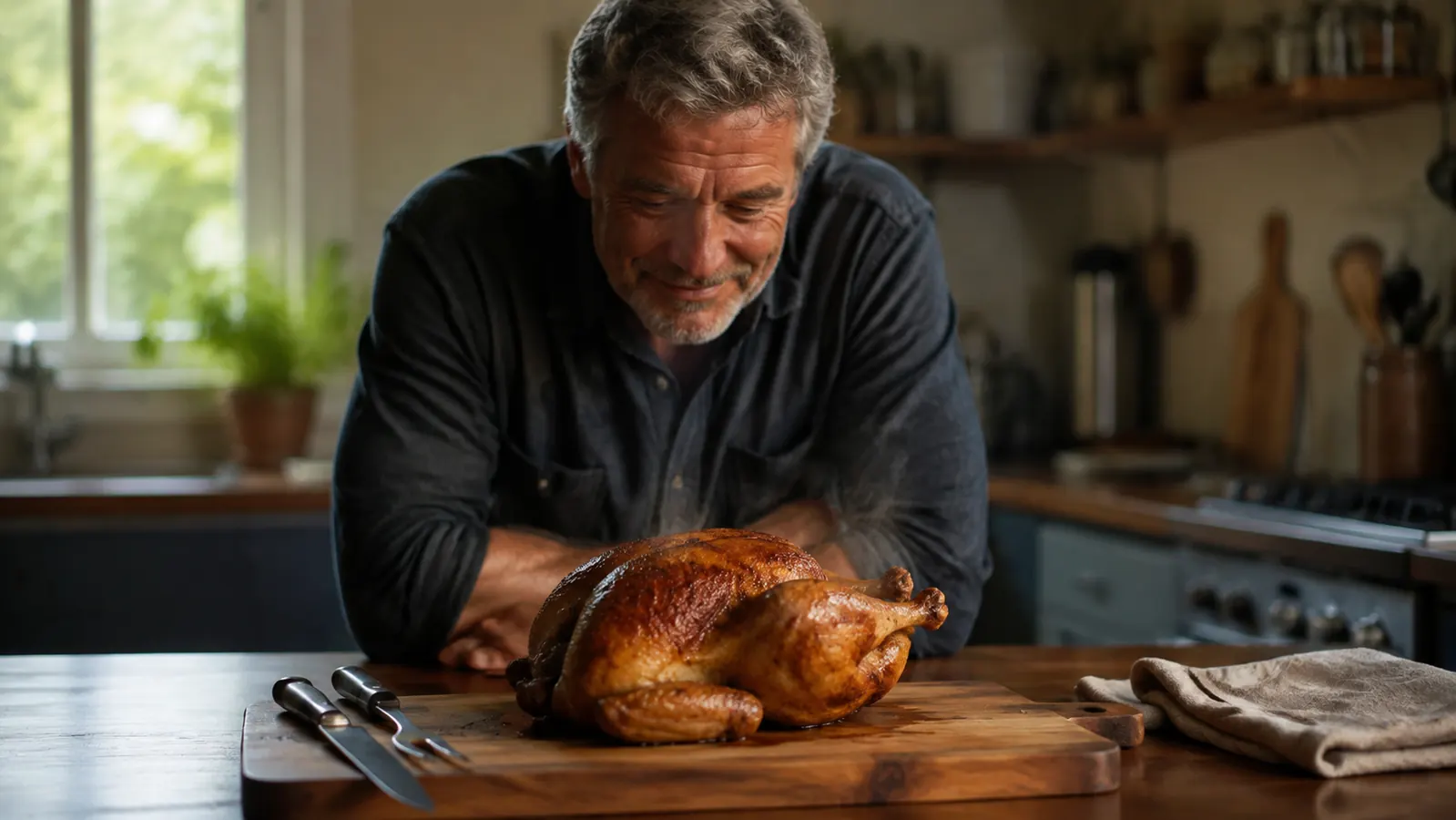
I pulled a fourteen-pound turkey at 157, let it rest to a safe 165 on the counter, and the white meat came to the table still wet. Thirty years of cooking birds by feel ended the day I trusted a number over my thumb.
What I Liked
- Reads in two to three seconds and repeats the same number every pull
- Backlit, rotating display you can read right at the grill
- Motion wake, so it is lit the moment your hand grabs it
- Pocket size, happy in a crowded drawer or a jacket
- Button cell lasted about a year before a swap
Where It Falls Short
- The one-second claim on the box does not match real-world speed
- Motion wake wants a firmer shake now and then
- The folding probe cannot monitor a long smoker cook hands-free
Alternatives I Considered
The honest competition at this end of the market is the ThermoWorks Thermapen, the unit every enthusiast forum measures against. It is faster, carries a tighter accuracy rating, and feels like a precision instrument. It also costs several times as much. For a cook who wants one good number a few times a week, the Thermapen is the luxury version of a job the TempPro already does, and the choice between them is what your budget tolerates. My comparison of the two walks through the real differences if you are deciding.
The ones I dropped fast: any dial thermometer, because it is slow enough to lie to you, and the app-connected wireless probes, which are only worth the setup if you smoke overnight and want to watch from the couch. If you already own a leave-in probe for the smoker and mostly cook steaks, chops and roasts, the TempPro TP19H is the fast second opinion that belongs in the drawer. That is the division I actually live with.
I have also handled the no-name instant reads at half the money, and the difference shows in the display. They needed the right angle, the right light, and a few extra seconds to settle. The TempPro screen is readable the way a kitchen tool should be readable: without thinking.
Who This Is For
Buy this if you cook meat to a temperature more than a few times a month, want one honest reading from the middle of the thickest muscle, and would rather spend the money on groceries than on gear. It earns its keep inside the first month for anyone who grills in season, roasts a holiday bird, or has never once served chicken that was still wet in the middle. The case for how an instant-read stops overcooked meat for good is easy to make after a week with one on the counter. I have handed mine to two buddies who swore they cooked by feel, and both ordered one.
Who Should Skip It
Skip it if you want a hands-free unit that reads a brisket from inside the house overnight, because that needs a wireless receiver and a leave-in probe. Skip it if a two-to-three-second wait for a settled number will irritate you, because the honest speed is not the figure printed on the box. And if you already own this probe under its old ThermoPro name, you have no reason to buy it again just because the package now says TempPro. Same unit, same drawing, new box.
One Thermometer. Every Cut of Meat.
Stop timing dinner by the clock and read the number instead. The TempPro TP19H has lived in my knife drawer for over a year and it is not going anywhere. Check today's price on Amazon.
Amazon Check Today's Price on Amazon →