
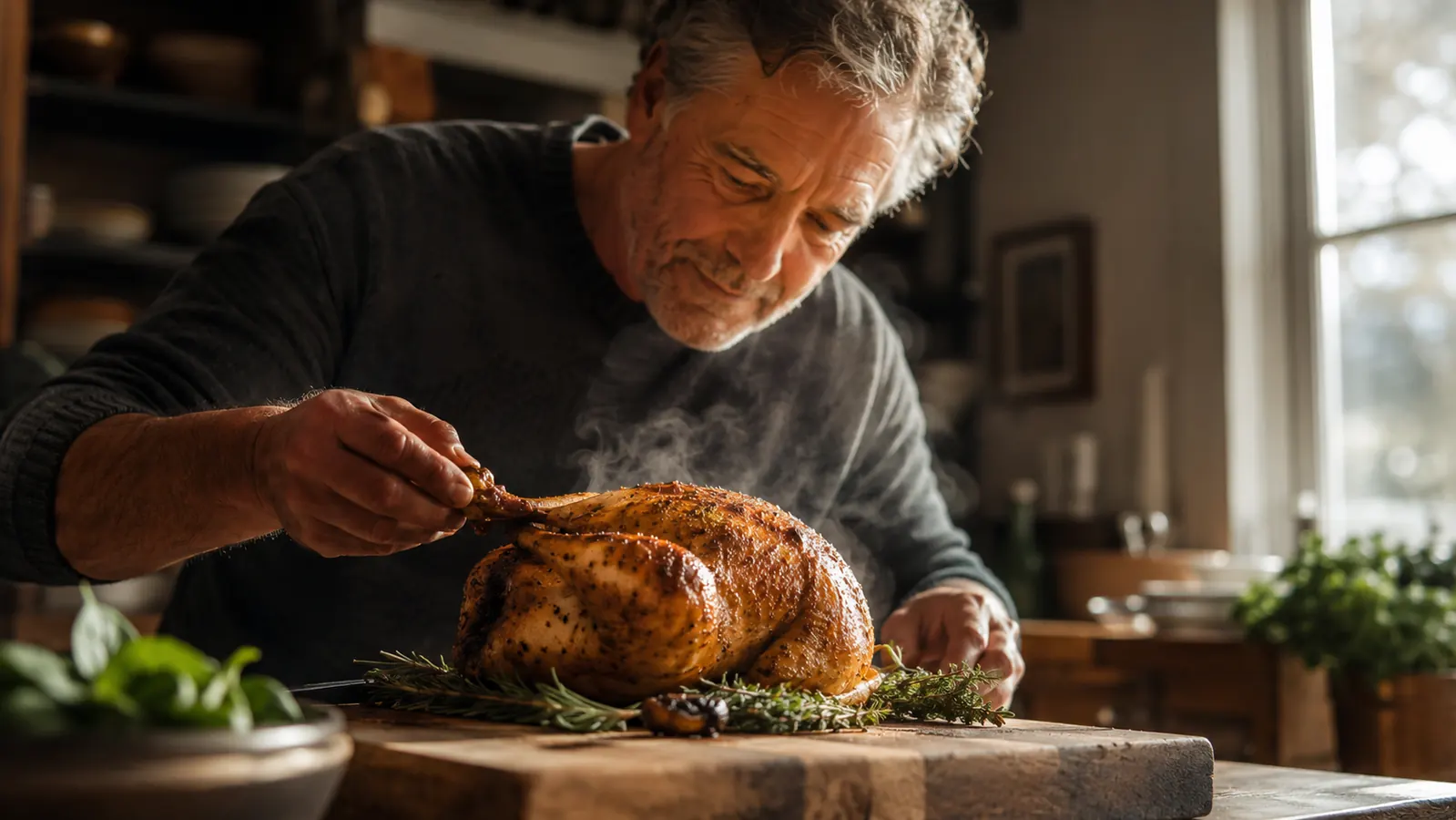
For thirty years I could not roast a chicken without turning the breast into sawdust. I am not exaggerating, and I am not a lost cause in the kitchen. I followed the box times. I poked the bird, cut into the thickest part, and eyeballed the color. Every Sunday the same deal: the legs ran clear, the breast read dry, and I told myself next week I would pull it ten minutes earlier. Next week never happened.
The fellow who finally set me straight is a guy I share a ride home from the hangar with. I mentioned the Sunday chicken problem and he looked at me the way you would look at a pilot who said the oil gauge was fine and took off anyway. You fly with gauges, he said. Cook with a probe. An hour later I ordered my own, a TempPro TP19H, the one-second instant-read thermometer that still carries the older ThermoPro name. Same tool, current branding.
Part of the problem was fear, and I will own that. Everything you hear about poultry screams food poisoning, so the natural move is to cook it longer to be safe. Longer, in a dry oven, is exactly how you turn a breast into a shoe. I needed a way to be safe and actually know I was safe, and a number does that in a way a timer never could. The gauge gives you certainty instead of a guess that leans toward overcooked.
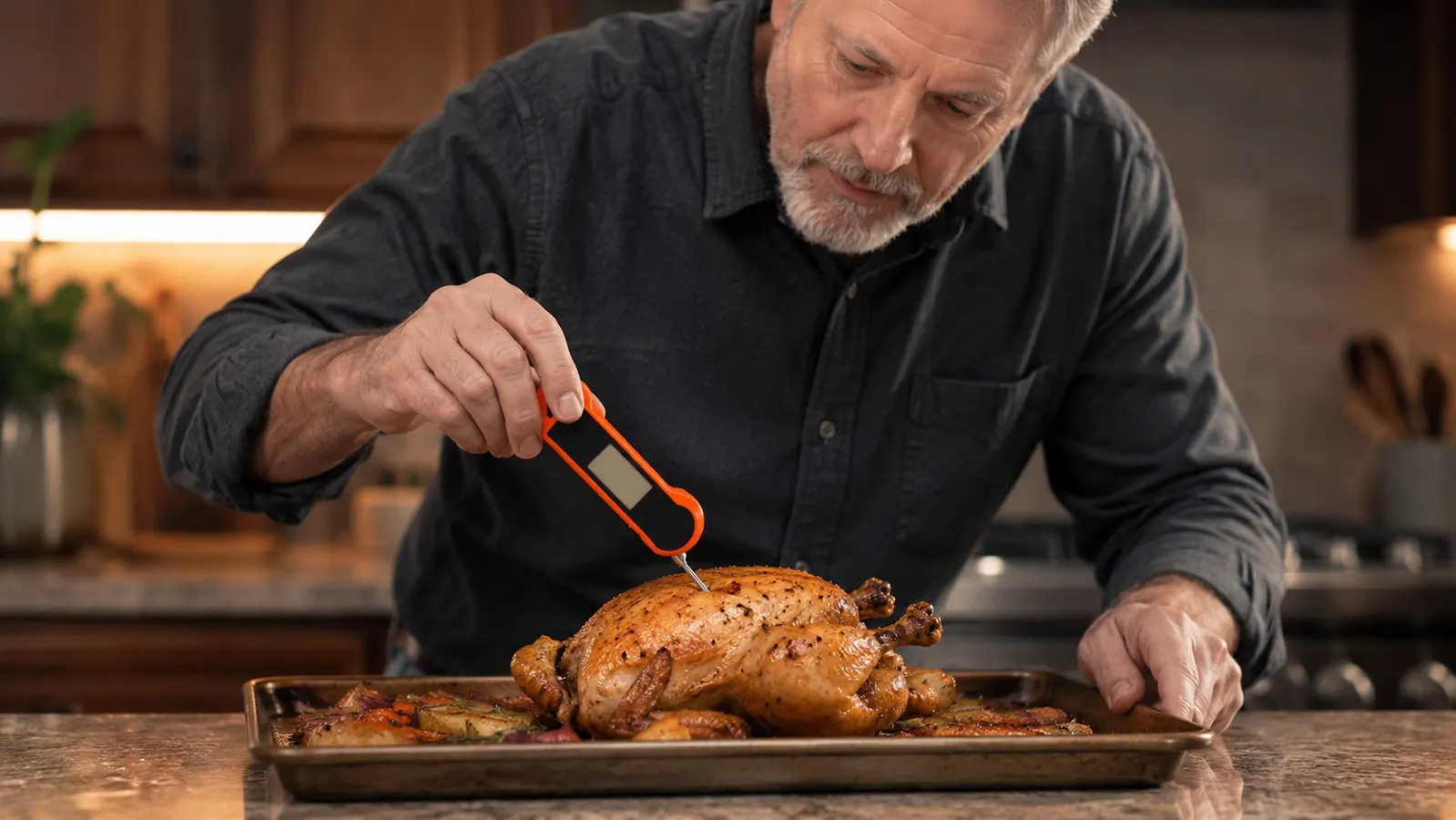
The first Sunday with it went like this. I set the bird in the oven and, for once, I did not set a timer for the guessed hour. When the skin looked right I pulled the rack, stuck the probe into the thickest part of the breast, clear of the bone, and waited. It settled on 165. I pulled the bird, covered it, and let it sit for twenty minutes. That rest is half the trick, and it is the half no clock ever told me about.
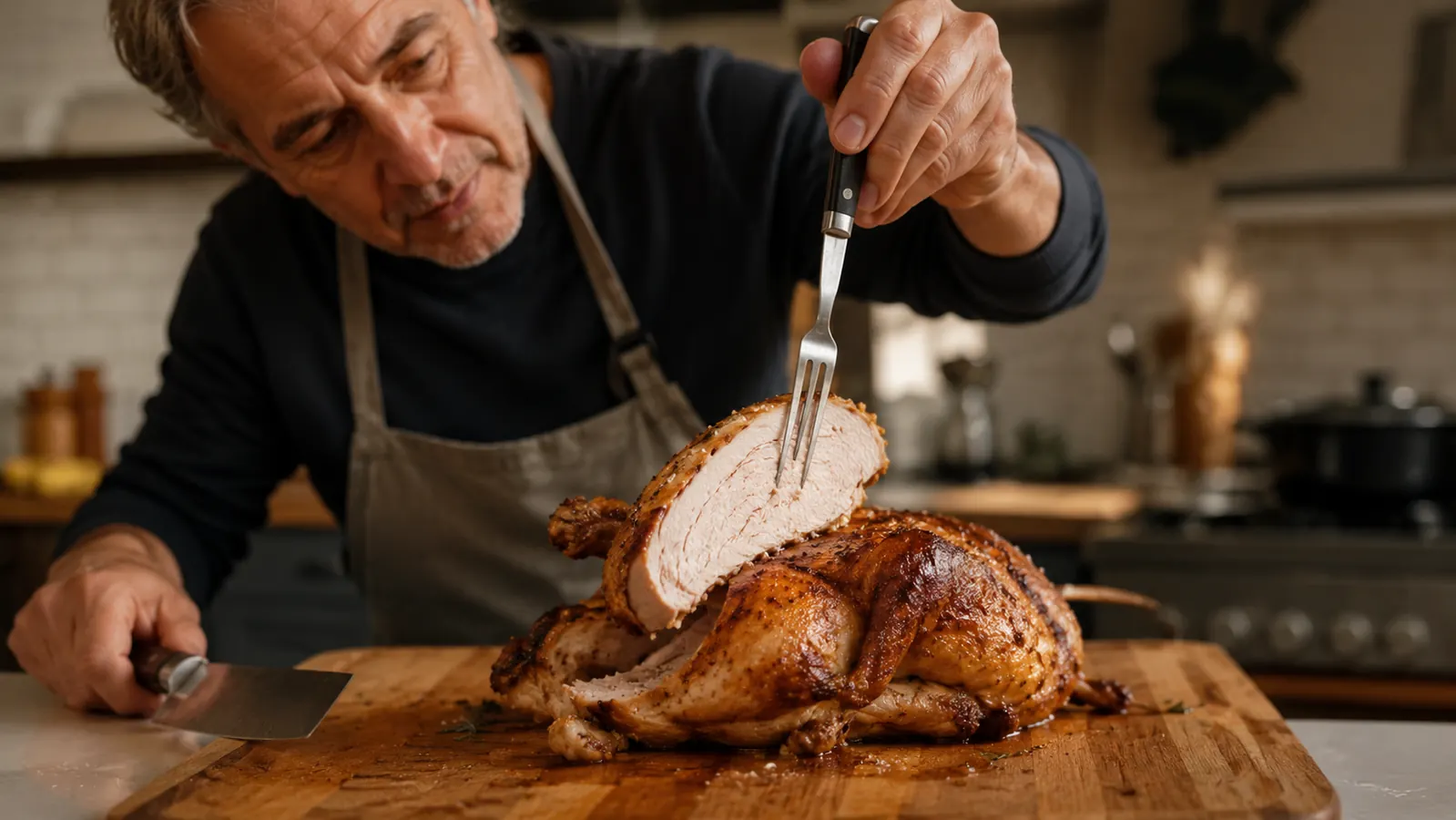
The carve was the payoff. The leg juice ran clear and the breast cut moist from the first slice to the last. Nobody at the table said a word about it, which is how you know. That bird and the thermometer cost the same week, and the thermometer has outworked every other kitchen item I bought that year. The TempPro lives in the knife drawer now, beside the good steel, not in a box in the pantry.
The first Sunday I pulled the bird at the number instead of the timer, the breast carved moist edge to edge. The fix was a one-second read, not a new oven.
One Second Is the Whole Difference
A quick probe read decides when the bird comes out, and the TempPro TP19H is the tool I reach for. It will not be the expensive piece on your counter. Check the current price on Amazon and put it next to your knives.
Amazon Check Today's Price on Amazon →The adjustment took about two Sundays. The first time, I still pulled the bird early out of habit and half expected the thermometer to be lying. It wasn't. The second Sunday I ignored the color of the skin and trusted the number, and that was the week the whole house noticed. After that I stopped checking the clock entirely. The probe had earned the spot the timer used to hold.
The target numbers are plain. Safe poultry is 165 in the thickest part of the breast, and dark meat is better at 175 to 180 because it needs more heat to turn tender. You probe the thickest part, away from the bone, because bone reads hot and can lie to you. And you pull the bird two or three degrees early, since it keeps climbing while it rests. Those are the only rules, and they fit on a sticky note.
It did not stop at poultry. I reverse-sear steaks with the same probe and pull them off at 125 before a hard sear. Pork chops come off at 145. A big Thanksgiving turkey gets checked in three places before it leaves the kitchen: both breasts and a thigh. The routine changed every protein I cook, and it took one afternoon to learn.
Two years in, the TempPro still goes in the drawer and comes out every Sunday. It wakes when you pick it up, which sounds trivial until you are wrist-deep in a hot bird. It reads in about a second, and the motion wake means one hand is enough. I have dropped it, washed the probe, and left it on the counter overnight. It keeps working, and I keep reaching for it.
Now the honest part, because every tool has one. This is a handheld probe, not a leave-in thermometer. If you are babysitting a brisket for seven hours, you want a wired probe that sits in the meat and beeps. And the wake on this one takes a beat, so give it a nudge before you trust the number. Neither is a reason to skip it. They are just the difference between this and a much more expensive rig.
What I'd Tell You If We Were Sitting at My Kitchen Table
Here is the short version. Buy a probe thermometer before you buy anything else for that kitchen, and do not buy the fancy one. A one-second handy probe you will actually use beats a laboratory instrument that lives in the drawer. Cook to the number, pull early, rest the meat, and you will fix more dinners than any gadget I can name. Mine is a TempPro. If I lost it tomorrow, I would order the same one again at today's price without a second thought. Dry chicken is a solved problem. It just took me three decades to buy the tool that solved it.
The Piece That Fixed My Sundays
The TempPro TP19H is the cheapest reliable fix in my kitchen, and it is the one I would replace first. See what it costs today and decide for yourself.
Amazon Check Today's Price on Amazon →