
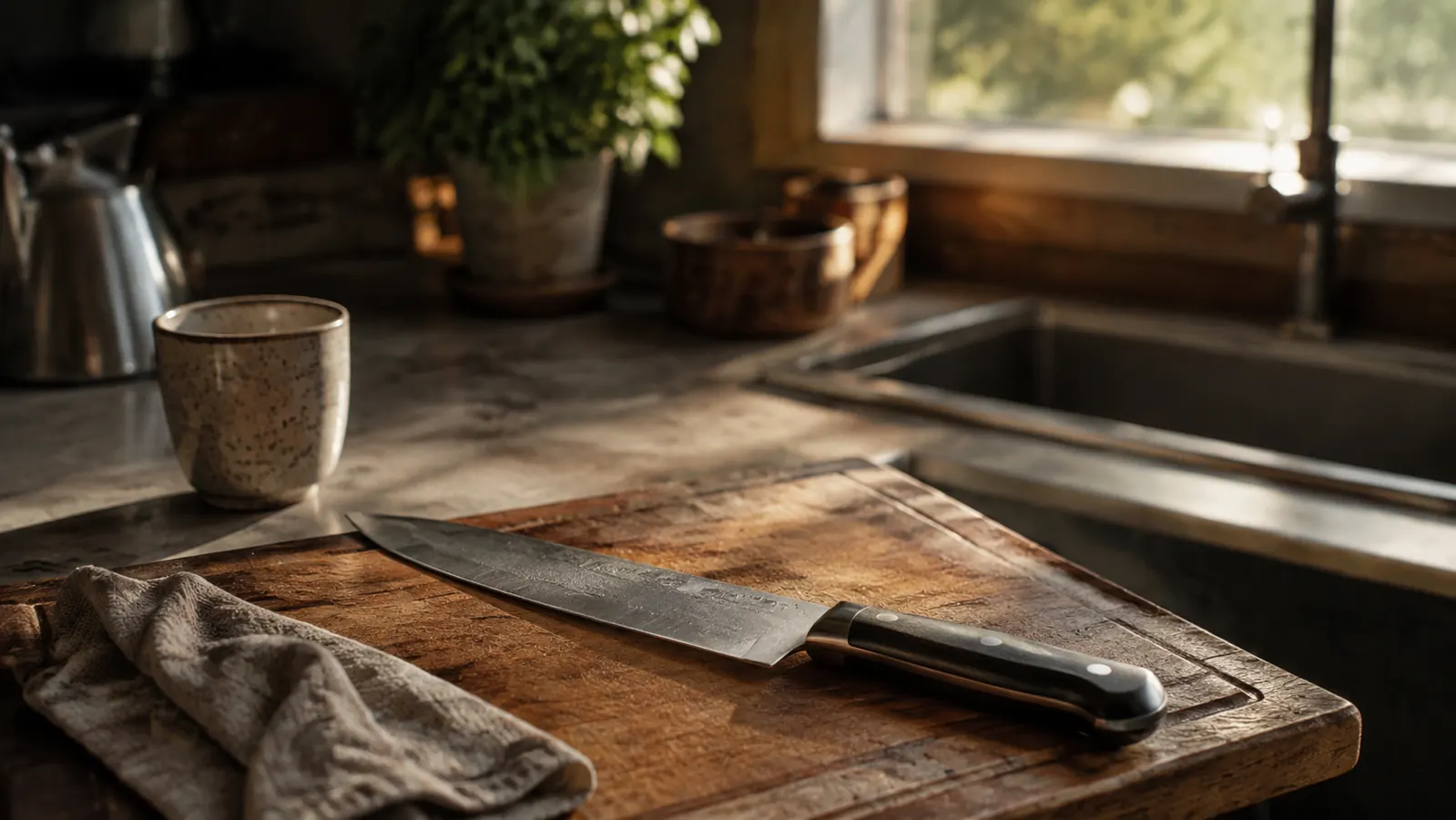
For thirty years my knife drawer worked like this. Buy a cheap serrated blade on sale, watch it glide through a tomato for two weeks, then spend the next few weekends sawing through carrots. Sharpen it, get one good month, repeat. It never occurred to me that the knife was the problem. I treated dull blades like worn wiper blades, a cost of doing business. Except it never stopped mattering. It just got more annoying, one vegetable at a time.
I turned sixty-one last spring. Most of my free time goes to a 1987 RX-7 in the garage and to keeping my pilot's license current, so I know what it means for gear to work first try. Planes do not get a dull-knife cycle; when a part stops doing its job, you replace it with one built to do the job. The kitchen was the one room where I accepted equipment that failed on purpose. Last fall, my wife and I finally agreed: one serious knife. Not a set. One knife. A single Wüsthof Classic 8-inch chef's knife, forged, full tang, made in Solingen.
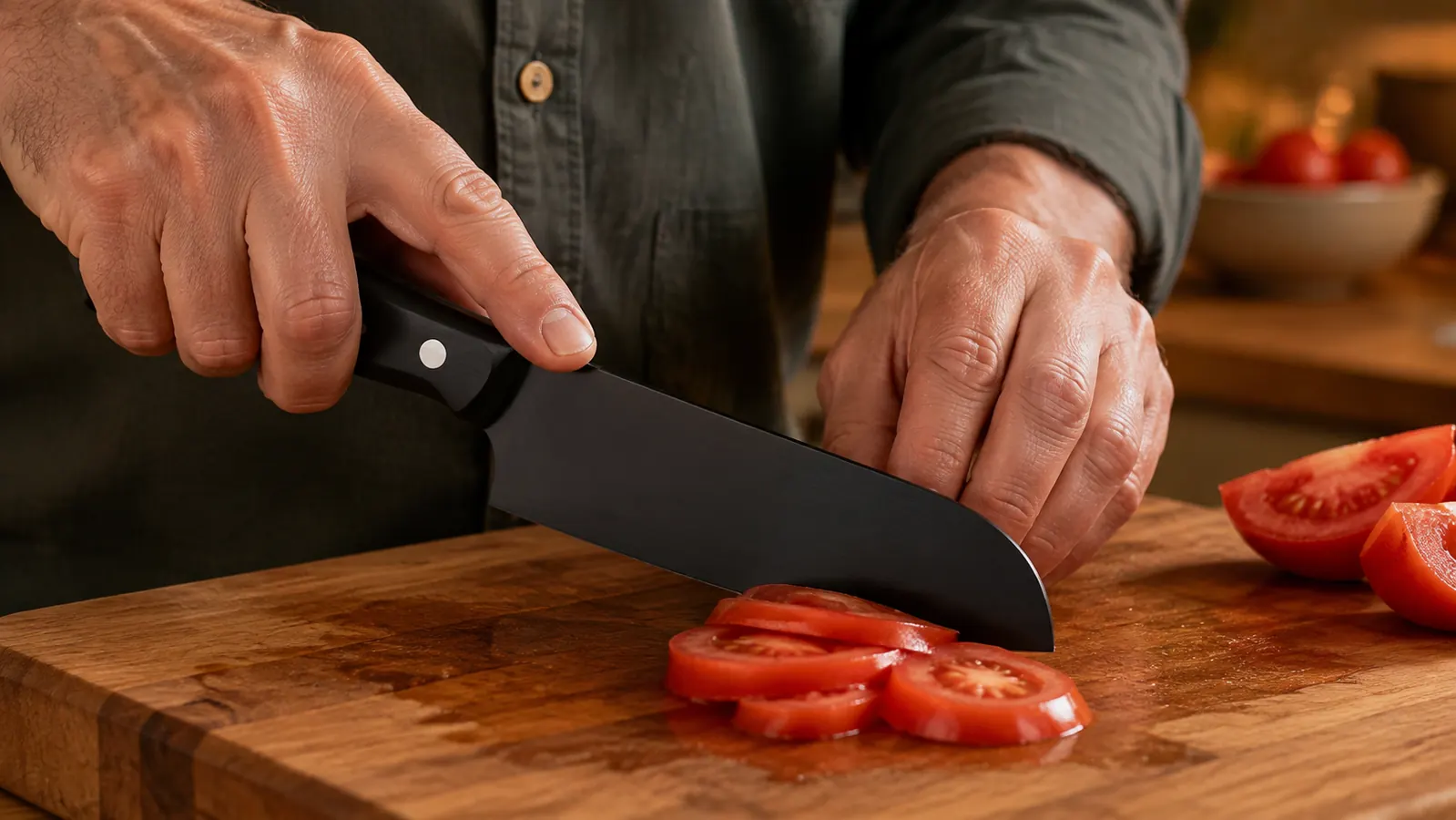
There are two kinds of blindness with kitchen knives, and I had both. The first is believing a good knife must cost a fortune. The second is believing they are all basically the same. The Wüsthof Classic is drop-forged from a single billet of X50CrMoV15 high-carbon stainless steel, then tempered and precision edge-ground in Solingen, a town that has made blades for six centuries. The knives I owned before were stamped from sheet steel, a fraction of the price. One kind is built to be replaced. This one is built to be kept.
The first month of daily prep, I did not touch a honing rod once. That had never happened with any knife in my house, and it was the proof I trusted more than any spec sheet. By week six I was running a thumbnail along the edge the way you check tires before a long drive, half expecting it to give. It did not give. When the edge finally did slow, somewhere around the third month, ten quick passes on a steel brought it straight back. Not sharpening. Honing. That is the whole lesson the cheap knives never taught me: a decent blade holds its edge, and a rod re-aligns it. A stamped blade needs a stone every month and behaves like a saw in between.
I will be straight about the downsides, because nobody needs another gushing review. The Classic is heavy. The full tang runs the length of the grip, and you feel it at the end of a long cook. If you only chop a garnish once a week, this is more knife than your hand needs, and a lighter stamped blade might suit you better. But for onions, potatoes, winter squash, a shoulder of pork, the weight is the point; it does the work for you. And it is not dishwasher-safe, so it never goes in ours, and the blade will scratch the way any honest tool does after a year of real use.
The first month of daily prep, I did not touch a honing rod once. That had never happened with any knife in my house.
The Knife That Made the Steel Redundant
One forged chef's knife, full tang, built to hold an edge for decades instead of weeks. If you are done with the dull-knife cycle, this is the knife to break it.
Amazon Check Today's Price on Amazon →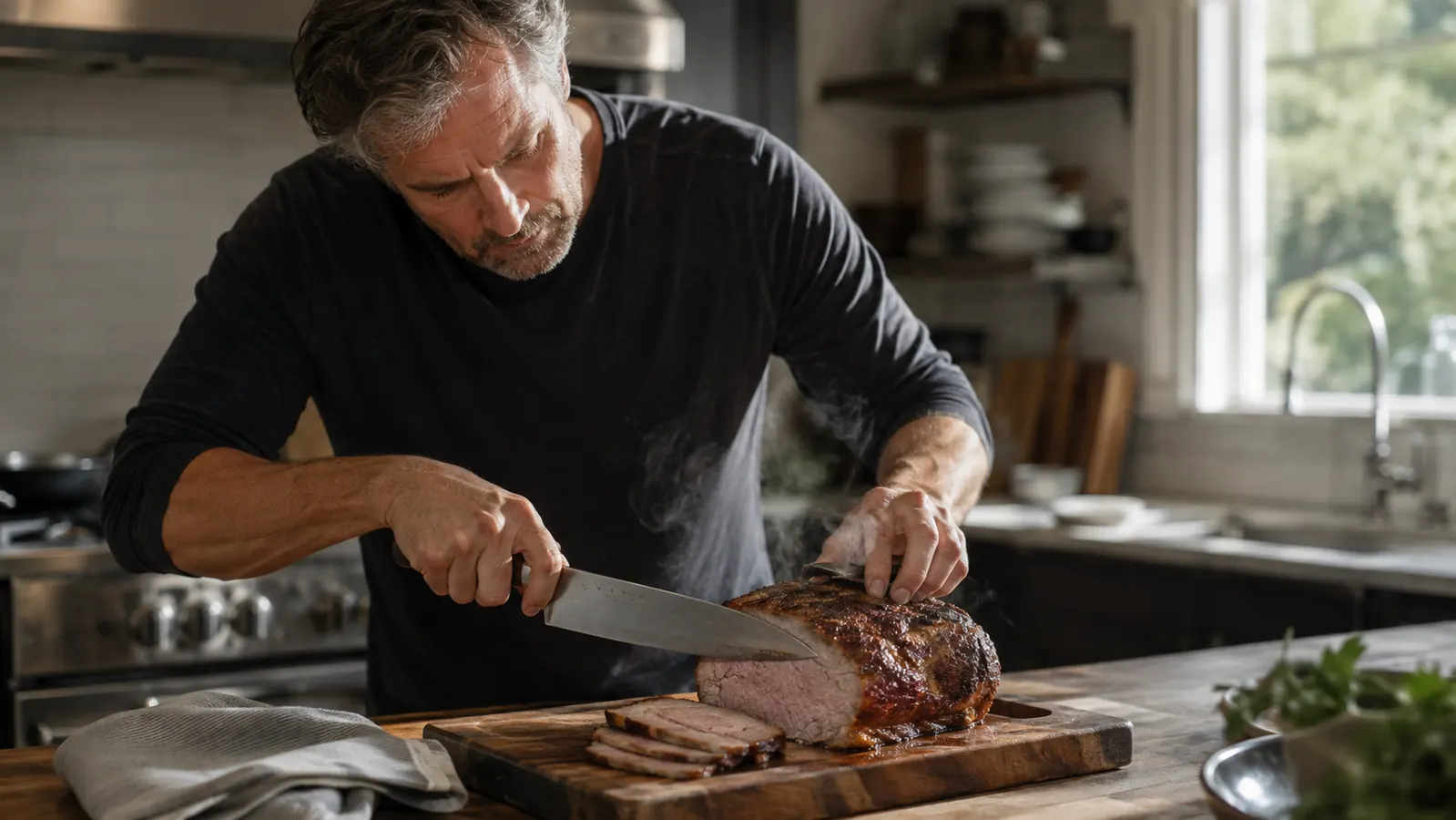
The dull-knife cycle ended for a reason that has nothing to do with steel, and it took me a while to admit it. I used to grab whatever blade was on top in the drawer, and every one of them was a compromise. Now there is one good knife on the rack, and I reach for it every time, no thinking required. It gets better because it gets used, and it gets used because it is better. You stop treating sharpness as a weekly chore and start treating it as the default condition. It is the same reason a car that corners well gets driven and a beater stays parked.
Six months in, my wife took the Wüsthof to carve the Thanksgiving turkey, and the carving set from our wedding never came out of the box. That was the moment this stopped being an expensive purchase and became the one knife I would replace tomorrow if the kitchen were lost. I do not like picturing that. The point is that one well-made tool, kept where you can see it, replaced a whole drawer of gear that was all failure modes and no function.
I do not sharpen it. That part surprised me. Once a year I will send it out to a professional, or spend an afternoon on a thousand-grit stone if the mood takes me. For the other fifty-one weeks, ten passes on the rod before a big cook keeps it cutting like the day it arrived. The routine costs maybe fifteen minutes a month, and it is the cheapest upkeep in my kitchen since I stopped cooking from printed recipes.
What I'd Tell You If We Were Sitting at My Kitchen Table
Skip the twelve-piece set with the wooden block. Every one of those sets ships with three knives you will never use and one you will sharpen forever. Buy one good chef's knife, learn to hone it, and hang it where you can see it. When the edge genuinely gives, and it will eventually, that is the day to spend on a stone or a professional sharpener, not the day to throw the knife away. I bought stamped knives three separate times over the years, and between the three of them and this one Wüsthof, I know exactly which purchase I would make again. It is the same answer I give for any tool in my shop that still works the way it did the day it was made.
My One Recommendation, After Six Months of Proof
Stop sharpening bad knives every month. Start with one good one, and hone it before the big cooks. The Wüsthof Classic is the knife I would buy again tomorrow.
Amazon Check Today's Price on Amazon →