
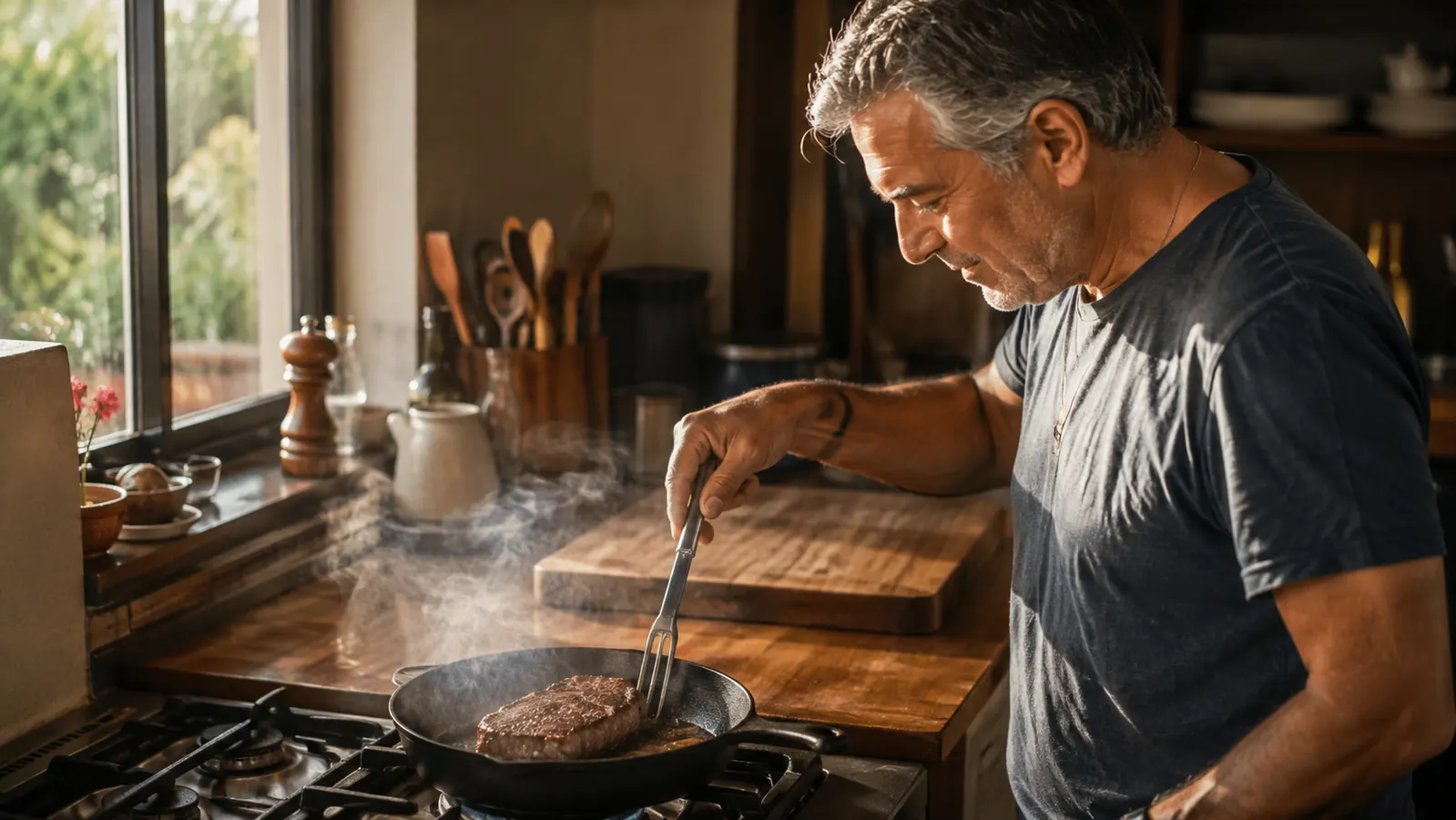
I cooked steaks for nearly thirty years on a gas grill and told myself the sear was fine. It was not. The crust came off gray and patchy, the middle was a coin toss, and I had sliced my way through a lot of overcooked ribeyes pretending they were great. Then last spring my neighbor Bill, who works the pit crew at a local drag strip, watched me pull another pale steak off the fire and said one sentence that stayed with me: you are cooking a steak on the wrong kind of heat. He held out his Lodge 12-inch cast iron skillet and told me to bring it back in a week.
I ordered my own Lodge pre-seasoned 12-inch skillet the next day. It showed up heavier than I expected, six and a half pounds of iron that could double as a wheel chock in the garage, with a factory seasoning that looked like dark satin rather than a chemical coating. For what it costs, it was the least complicated piece of cookware I have ever owned: one slab of iron, nothing to flake, nothing to scratch, nothing to break.
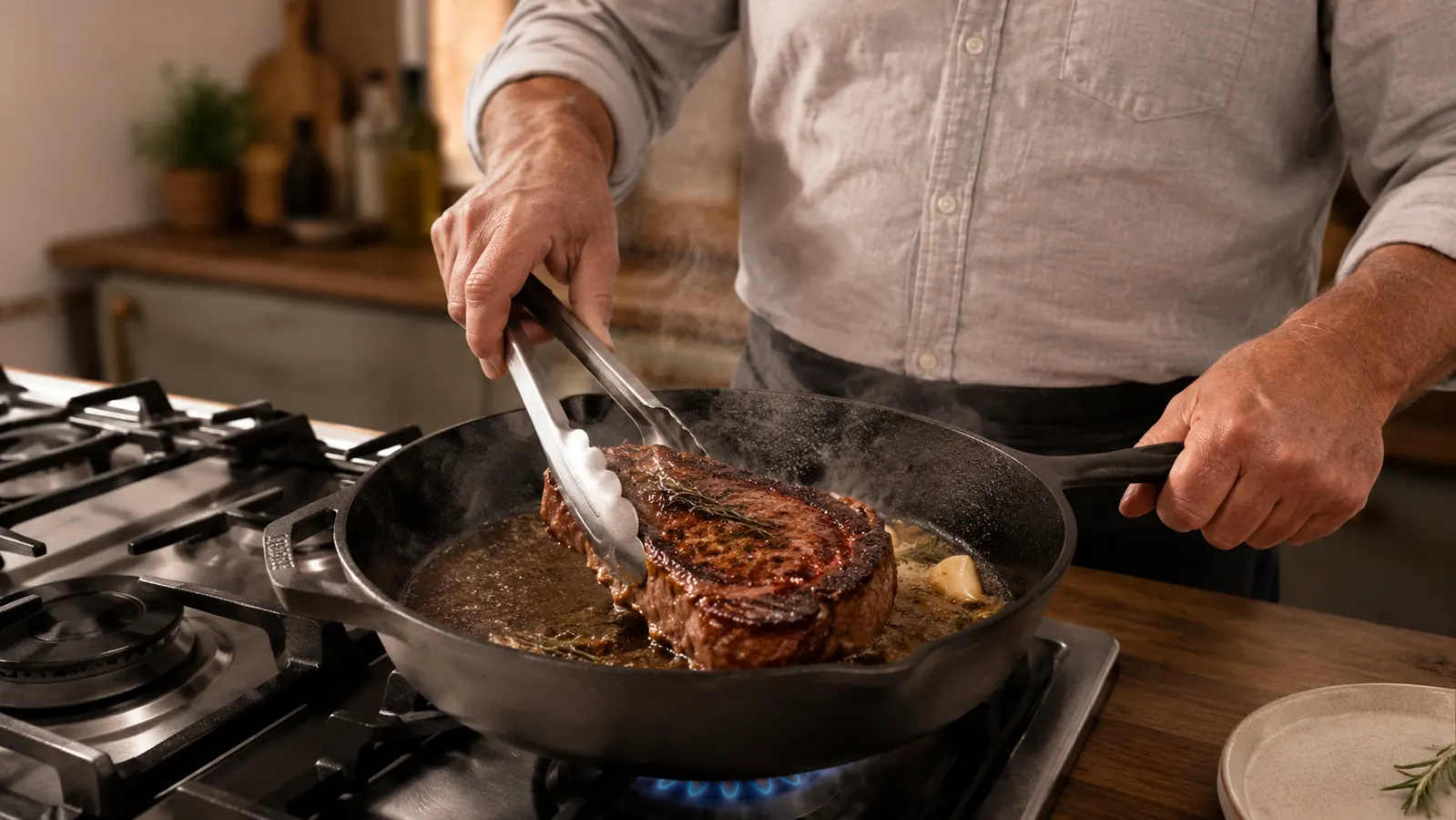
The first two steaks taught me respect. I set the pan on medium-high, dropped the steak in, and got an uneven crust, a raw middle, and smoke alarms all at once. Cast iron heats the way a big-block engine does: it does not rush, and it does not recover quickly either. I started giving the skillet ten full minutes to come up to temperature before the steak touched it, one extra minute of rest per side, and that single change did more than any rub or marinade I had bought in twenty years.
The steak that rewired the whole habit was a fourteen-ounce bone-in ribeye, dry brined overnight and pulled from the fridge forty minutes before cooking. The Lodge sat over a burner at just short of full for ten minutes, long enough that a drop of water skittered across the surface like quicksilver. The steak went in with a hiss, I did not touch it for four minutes, flipped it once, basted it with a knob of butter and a crushed garlic clove for the last minute, and pulled it at 128 degrees on an instant-read thermometer.
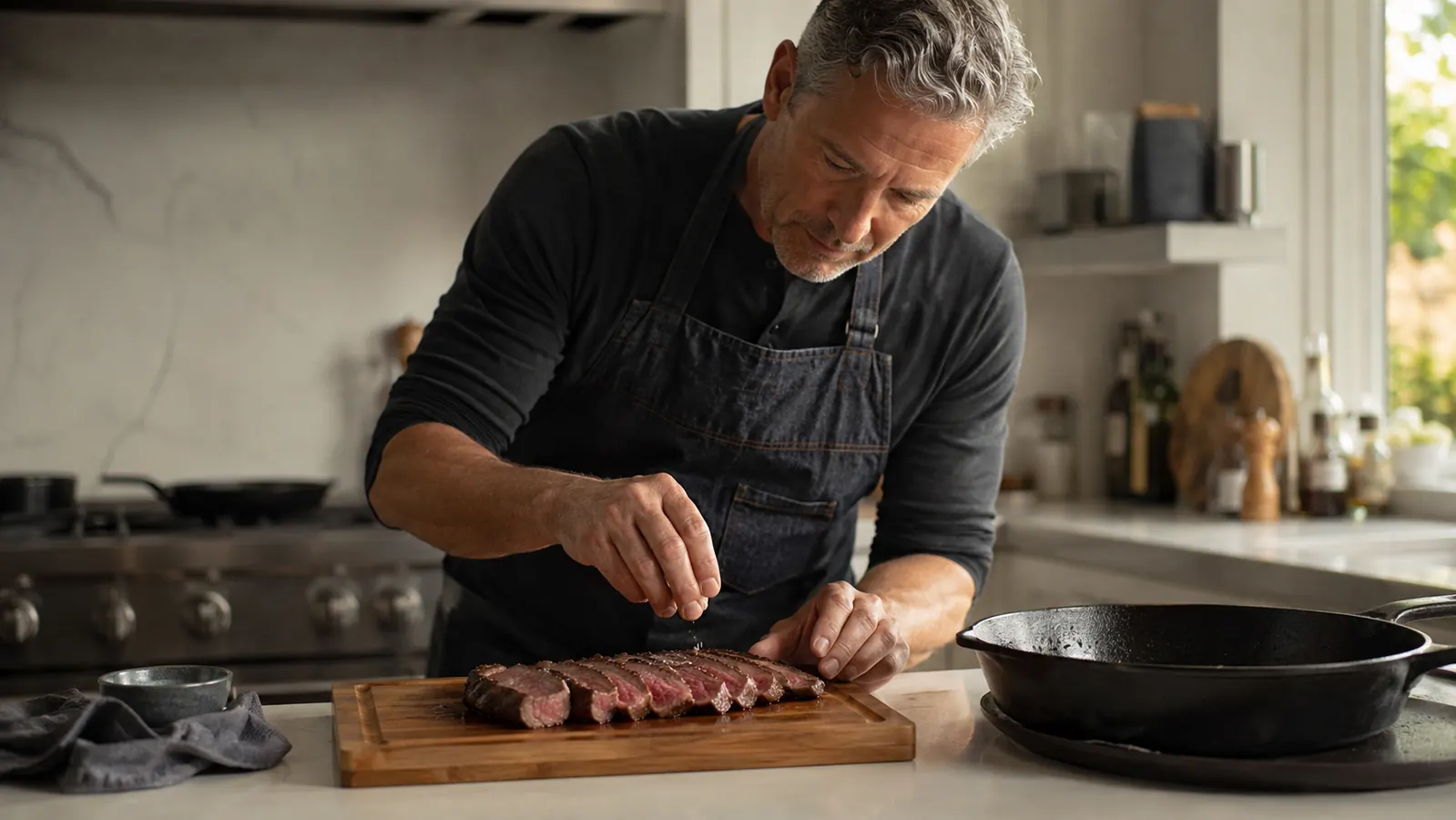
It rested for eight minutes on a cutting board while the crust stayed shatter-crisp. When I sliced it, there was clean medium-rare from edge to edge, no gray band anywhere, and the smell actually filled the whole kitchen through the open back door. My wife said it was the best steak I had cooked in thirty-one years of marriage. Bill was right, and I ordered a second Lodge for the camper the same week.
Four minutes of stillness on a properly heated Lodge pan produced a crust I never got in thirty years of grilling.
The pan that fixed my steak is on Amazon, and it is not expensive
The Lodge 12-inch pre-seasoned cast iron skillet did more for my steak than every grill gadget I ever bought, and it outlasts all of them by decades.
Amazon Check Today's Price on Amazon →I will not pretend this skillet is maintenance-free. Every wash ends with the pan dried on a burner and a thin coat of oil before it goes back on its hook, and the dishwasher is out of the question. My wife does not love the weight, and acidic sauces still get cooked in a different pan. The factory seasoning is a starting point, not the finish; you build on it every cook. But here is the trade: there are no coatings to replace, and if the pan ever rusts or strips, you restore it with an oven and a coat of oil instead of a trip to the store.
Here is the part that makes sense to anyone who has ever watched a race: this pan is a flywheel. Once the Lodge comes up to temperature, it holds a charge, so cold protein lands on a surface that barely dips. A thin pan loses its heat the moment it is loaded, the way momentum disappears in a slow corner. Cast iron keeps its momentum, and that is the whole story of the crust.
A year and a half later, the 12-inch Lodge is the pan I reach for first: cornbread, a seared whole chicken, a reverse-seared tomahawk for company, eggs on mornings when I give it the ten minutes. It outperforms stainless steel cookware I paid several times as much for, and nothing in the drawer has been worked harder.
It is not a pan that replaces everything, and I want to be straight about that. It is heavy, it reacts slowly when you turn the burner down, and delicate fish cooks better somewhere else. But for the one job that defeated me for three decades, searing a steak, it was the fix. One skillet, one coat of seasoning at a time, roughly thirty of the best dinners I have made in my life.
What I'd Tell You If We Were Sitting at My Kitchen Table
Buy the 12-inch, not the 10. A real steak needs the surface area, and the extra iron is exactly what holds the heat. Give the pan ten minutes to come up to temperature and ignore how long that feels. Dry brine the steak the night before, pat it dry right before it hits the pan, then leave it alone: four minutes of stillness per side beats any marinade, rub, or press you can buy.
And unlearn the fear of the seasoning. A well-used blackened Lodge looks rough and cooks fine; the seasoning is the nonstick, so the more you cook with it, the better it gets. Oil it thin when you are done and stop worrying. If I can keep one happy for a year and a half with a drag-strip pit crew and a hangar on the side pulling at my weekends, anyone can.
Buy the pan once. It will outlast the grill
One slab of iron, one-time purchase, still searing a better crust than my gas grill after a year and a half. That is the honest long-term story of the Lodge 12-inch.
Amazon Check Today's Price on Amazon →