

I started this year with a prejudice. I grew up on a classic stovetop pressure cooker, the Presto with the rocking regulator that made my mother's kitchen sound like a steam engine, and I told myself the Instant Pot was a gadget for people who can't watch a flame. Then I ran a three-pound chuck roast through both machines on the same Sunday, same butcher, same seasoning, and the honest answer to the whole argument turned out simpler than I expected. The stovetop unit finished about twenty minutes sooner and cooked at a true 15 pounds per square inch. The Instant Pot did the same dinner while I walked away, then slow-cooked, made rice, and braised a second meal for the freezer. That trade is the entire article.
Let me be straight about who's writing so you can weigh the recommendation. I'm a home cook in his sixties who does the daily cooking in this house, and on weekends I'd rather be at the track or hanging around the hangar than hovering over a pot. I've had the Instant Pot Duo on my counter for eleven months now, and I kept the Presto for comparison duties. I timed builds, weighed results, scorched food in both, and took notes. I also ran the same pinto beans three times in each machine to separate luck from a repeatable result. What follows is the version I'd tell a friend, not a spec sheet.
The Same Roast, Two Cookers
Here was the setup: a 3.2-pound chuck roast, salt and pepper, seared in whichever pot was going to cook it. The stovetop cooker was jiggling pressure in about five minutes, and I dropped the burner to hold it. The Instant Pot took closer to twelve minutes to build and seal. From the first sizzle to a fork-tender roast, the Presto ran about seventy minutes total, and the Duo took about ninety. Both were tender. Both gave a rich gravy. I served both with the same mashed potatoes and asked the family to pick a favorite blind, and nobody called a winner with any confidence. That told me the twenty-minute gap was buying faster food, not better food. Then, after dinner, the stovetop unit went back in the cabinet, because nobody here pressure-cooks seven days a week. That last sentence is the whole point of this article.
Here's the honest side-by-side from my own kitchen. Left column is the Instant Pot Duo, right column is a classic stovetop cooker. Read the winner column and the tradeoffs write themselves. Notice the wins split almost down the middle; that's the honest picture.
| Instant Pot Duo (6 quart) | Classic stovetop cooker | |
|---|---|---|
| Upfront cost | More, typically in the triple digits before sales | A fraction of that for a plain stovetop unit |
| Pressure | Holds around 10 to 11 psi, set by the machine | A true 15 psi once the regulator seats |
| Time to full pressure | About 10 to 15 minutes to build and seal | Roughly 4 to 7 minutes, depending on the burner |
| Three-pound chuck roast | About 90 minutes to fork-tender, all in | About 70 minutes |
| Attention required | Set it and walk away, auto keep-warm | You hold the flame to keep pressure steady |
| What else it does | Slow cook, rice, saute, steam, yogurt, warm | Pressure cook, and nothing else |
| Scorched fond | Even element heat, rarely burns the bottom | A hot burner spot can singe fond fast |
| Canning | Not approved for pressure canning | The standard answer for canning the garden |
| Ten-year outlook | Electronics age, but ring and pot are replaceable | All mechanical, a gasket costs pocket change, outlives its owner |
| Best for | Weeknight one-pot dinners, set-and-forget cooks | Speed, canning, and cooks who like the control |
Where the Instant Pot Wins
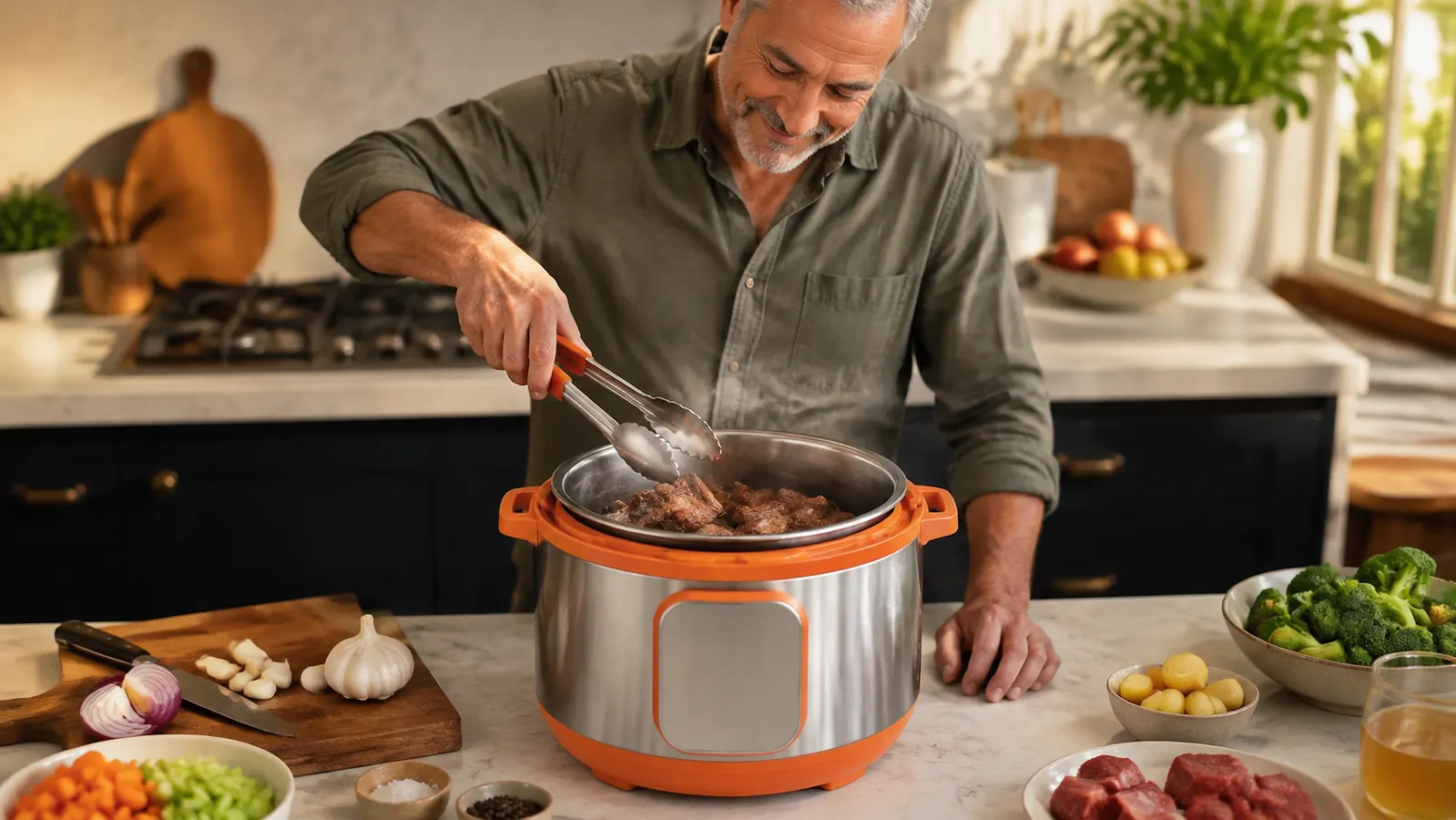
If you cook on weeknights after a long day, this is the whole ballgame. You sear in the pot, add liquid, set the valve, tap a button, and leave. When the program finishes, it drops to Keep Warm on its own, so dinner that's done at 6:45 is still hot at 8:00. I've walked out mid-cook for a phone call, come back thirty minutes later, and the pot had handled everything I left unattended. A stovetop cooker will not do that. The moment you leave the flame, you're guessing whether pressure is still holding. This kitchen runs on interruptions, and the pot that tolerates them is the pot that gets used.
The second advantage is consistency. An electric element holds its heat through a thermostat, so the pressure rides steady no matter who's standing at the stove. Holding pressure on a stovetop unit is a skill: you learn to read the jiggler and keep the flame at the sweet spot, and every stove behaves differently. I've cooked the same batch of pinto beans on my coil range and on a camp burner at the fly-in, and the Duo gave the same bowl of beans both times. Same lid, same timer, same result, anywhere there's a wall outlet. It also helps that the countdown doesn't start until the pot seals, so ten minutes on the display is ten minutes at pressure.
Then there's everything it does when it isn't pressure cooking. The Duo slow cooks, steams, makes rice, sautes in the pot, makes yogurt, and warms. Since I bought it, my slow cooker has lived in the attic. One appliance does what that used to, in less time, and it makes rice better than my old rice cooker did. Cleanup is a dishwasher trip for the liner pot and the lid; when chili leaves a ring of burnt fond on the bottom, it lifts out and the machine does the scrubbing. A stovetop liner also goes in the dishwasher, but its regulator and gasket are a hand-wipe job. It has even handled jobs no pressure cooker was ever meant for, like steaming a batch of artichokes on a slow Sunday.
Where the Stovetop Cooker Wins
Now the part nobody with an electric unit likes to hear. A stovetop cooker runs at a true 15 psi, and that extra pressure is the reason the Presto beat the Duo to dinner. More pressure means hotter steam, around 250 degrees inside the pot instead of about 240, and every minute at that temperature does more collagen work on a cut like chuck. For a big batch of stock, a tough roast, or a pot of beans, the stovetop unit is genuinely faster start to finish. If the point is speed and I'm standing at the stove anyway, the stovetop cooker wins.
The second win is control. You can lift the whole pot off the burner to drop pressure instantly, let the jiggler ride low and slow, or bring it back up in a hurry. Electric units give you a couple of pressure settings and a release valve. When I want a roast to come down slowly so the juices settle back in, the stovetop pot gives me that with a flick of the wrist, while the Duo wants a natural release and a patient half hour. And there is one place that control is a hard requirement: pressure canning. The USDA doesn't approve electric pressure cookers for canning because they can't hold a sustained high pressure reliably, and canning demands exactly that. I canned a summer's worth of green beans with the Presto this year, and I wouldn't do it with the Duo no matter what a listing claims.
And the stovetop cooker is the honest buy if you think in decades. It's a pot, a lid, a gasket and a spring. The gasket costs pocket change. There's no circuit board, no heating element, no display to die on a Tuesday night. My mother's Presto, bought before I was born, is still cooking in my brother's kitchen today, and the only part it has ever needed in five decades is that gasket, replaced twice. The stovetop unit is the cheaper way into pressure cooking, period. The Duo is well built for what it is, but it's electronics, and electronics age.
If Set-and-Forget Is Your Tuesday Night, This Is the One
The stovetop unit honestly wins on speed, canning and raw durability. But if your kitchen needs one pot that does the weeknight work and watches itself, the Instant Pot Duo is the practical buy. It pressure cooks, slow cooks, steams, makes rice, and it's the one that stayed on my counter.
Amazon Check Today's Price on Amazon →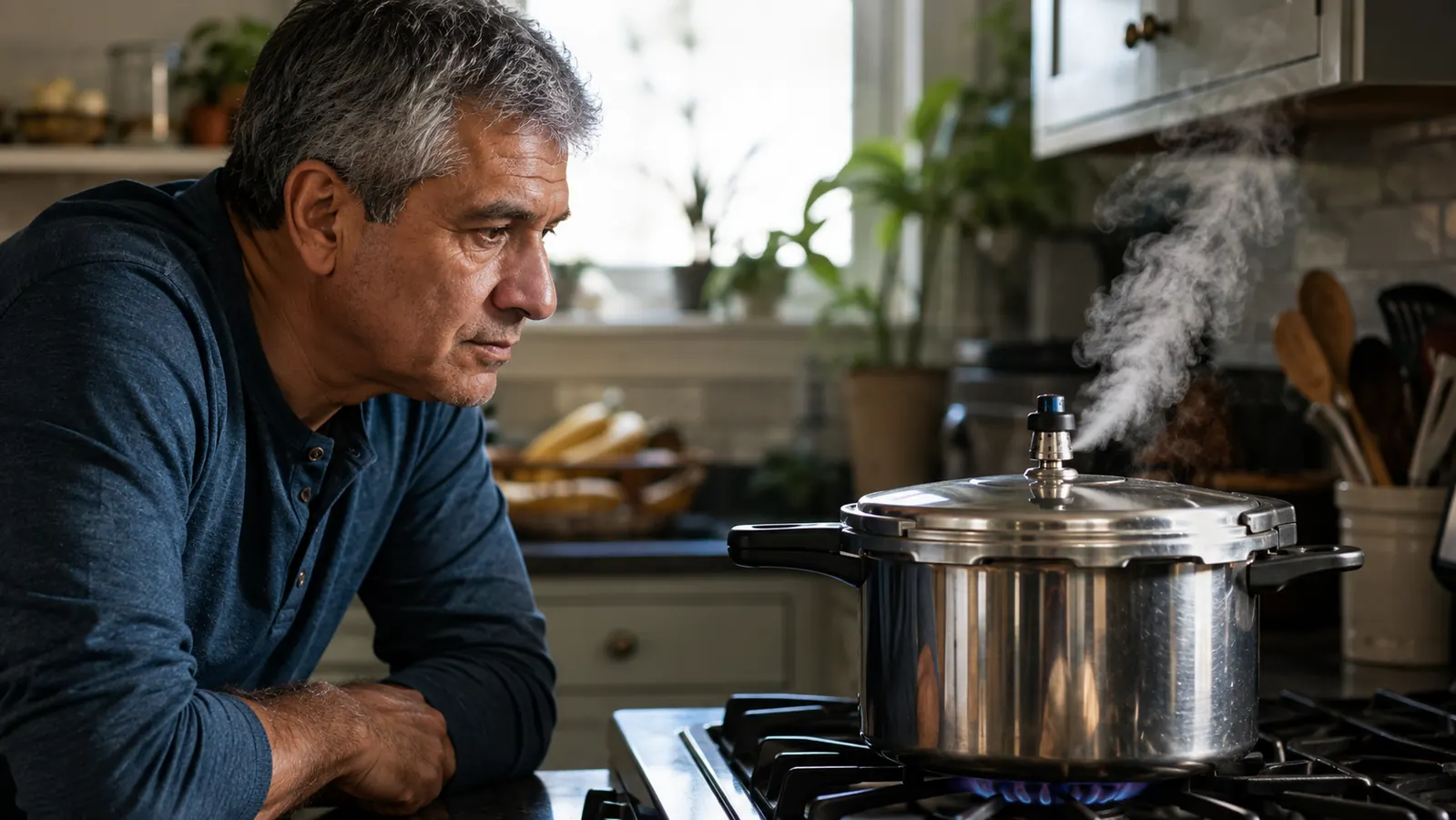
The One Number Behind All of It
Everything above traces back to one number, so it's worth understanding even though you'll never read it on the box. A pressure cooker works because water under pressure boils at a higher temperature. A stovetop cooker perched at 15 psi takes the contents to roughly 250 degrees. The Instant Pot Duo rides around 10 to 11 psi, which gets you to about 240. That gap doesn't sound like much, but it's the whole source of the time difference: the stovetop unit is a smaller pot heating to a higher target, so it arrives faster, stays hotter, and gets the same tenderness out of a roast sooner. Put another way, water at 250 degrees does more work per minute than water at 240, and over a long cook those minutes compound into the gap you saw at my table.
The takeaway is not what most reviewers imply. The stovetop cooker isn't a better cooker, and the Instant Pot isn't a lazy shortcut. They're two devices built around the same principle, and the right one matches how your kitchen actually runs. It's the same reasoning behind having a weekend car and a daily driver: the one you use most days earns its keep, and the one that wins on the track still owns its Sundays. Mine runs on set-and-forget weeknights and weekend batches, so the Duo sits on the counter and the Presto comes out for canning and stock days.
The same chuck roast, same seasoning: seventy minutes on the stovetop cooker, ninety in the Instant Pot, both fork-tender. Buy the one that fits your Tuesday night, not the one with the better reputation.
Four Questions Before You Spend
Before either unit ships to your house, answer four questions and the decision makes itself. One, do you stand at the stove while dinner cooks, or do you need to walk away? Two, do you can the garden, or is dinner the whole job? Three, is there a permanent counter spot with an outlet, or does the pot live in a cabinet? Four, do you want a tool that lasts forty years, or an appliance that makes seven things easy for ten? My answers were walk away, no canning, yes to counter space, and give me seven easy years. That's the profile the Duo fits. If even one of your answers points the other way, buy the stovetop unit and sleep fine, because you bought the right tool for your kitchen instead of the one with the louder marketing.
Who Should Buy Which
If dinner has to be done by seven and you're often doing two things at once, buy the Instant Pot Duo. It finishes in the background while you do the rest of the evening. You get the pressure dinners, the slow-cooker duties, the rice, and the consistency, and the trade, a longer trip to pressure and a slightly lower peak, almost never shows up in the bowl. This is the one I'd hand to someone who wants to be told what to buy once and then not think about it. It's also the one I'd hand to a kid setting up a first kitchen, because it forgives the beginner mistakes you make before you have a feel for a flame.
Buy the stovetop cooker if speed is the point, if you can the garden, or if you simply like mechanical tools with nothing to break. It's cheaper, faster, and built to outlast you. It asks more on a weeknight: you have to be there to hold the flame. That's a feature if you enjoy it and a job if you don't. If you're a stock-and-beans cook who treats the stove like a cockpit, the stovetop unit is the honest pick. You'll also never wonder whether a fuse or a logic board is behind a failure, because the only thing that makes it work is the flame, and the flame always answers.
If I had to keep exactly one, I'd keep the Instant Pot, and it's not fanboy reasoning. It's that the Duo actually gets used. The right pressure cooker is the one that's out on the counter on a Tuesday, and in this kitchen that's the Duo. The Presto wins the Sunday speed test and the canning duty every time. But my year is ninety weeknights, and set-and-forget wins those. If your year looks different, the answer flips, and that's the entire point of this article.
The Verdict: Get the One That Gets Used
For a practical home cook, the Instant Pot Duo is the right first pressure cooker: one pot that does weeknight dinners, rice, slow-cooked batches, and watches itself. The stovetop cooker is faster and better for canning, but the Duo is the one that actually earns its counter space. Check today's price and see where it lands for you.
Amazon Check Today's Price on Amazon →